Sri Lanka packs a surprising amount of wildlife into a small island: leopards, sloth bears, crocodiles, hundreds of bird species and several thousand wild Asian elephants. Most visitors have time for one or two safaris, so it pays to choose the right park.
Yala: for leopards
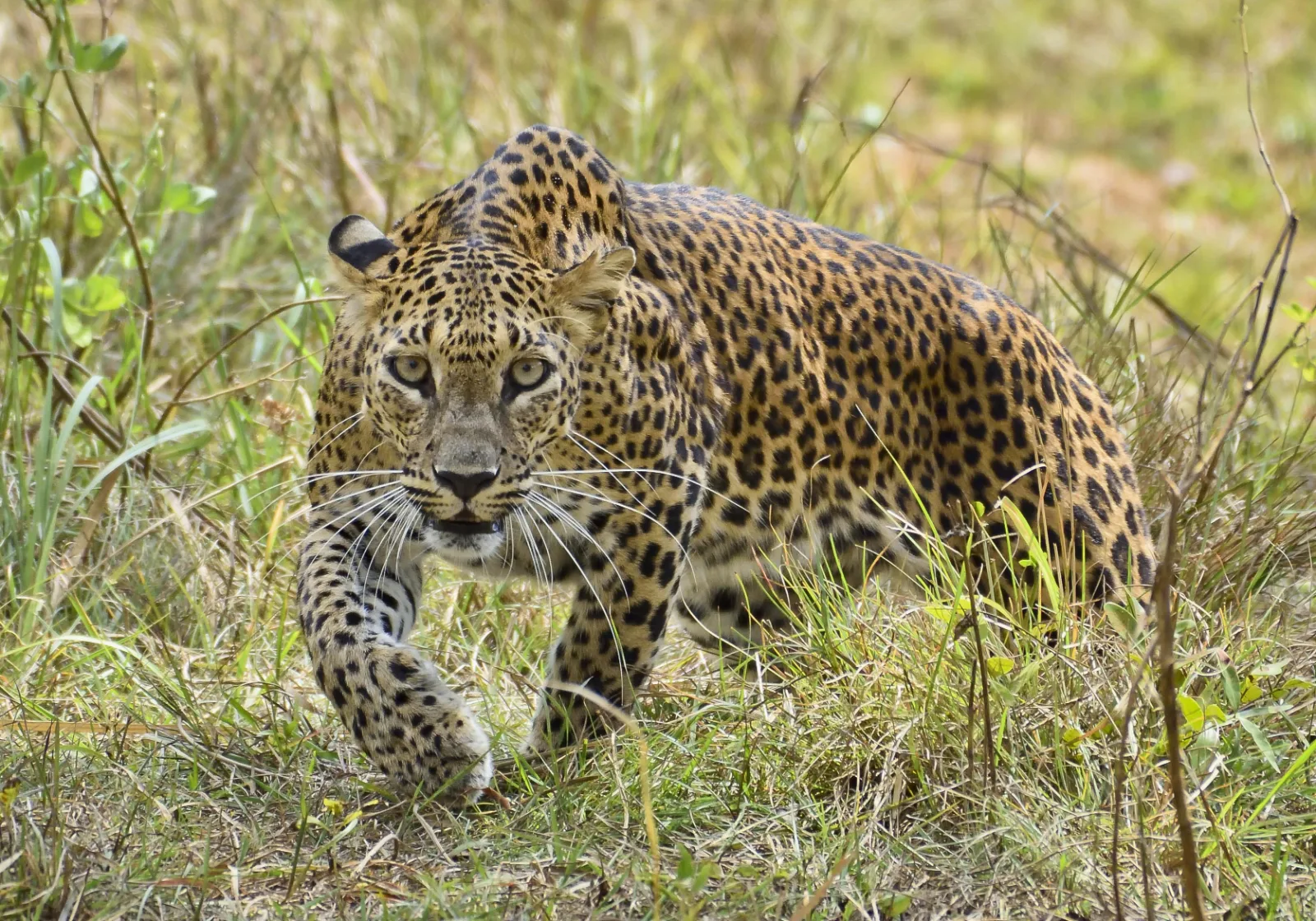
Yala, on the south-east coast, has one of the highest densities of leopards in the world, along with elephants, sloth bears, crocodiles and peacocks everywhere.
- Best for: leopard sightings and a classic dry-zone landscape of scrub, rock outcrops and lagoons.
- Downsides: Block 1, the most visited section, gets very busy, and jeeps can crowd around a sighting.
- Closures: sections of the park close in very dry spells. In 2026, Blocks 1 and 2 were closed from 14 September to 15 October because of drought, while the other blocks stayed open. Check before you book a September or October trip.
- Base: Tissamaharama or Kirinda.
Udawalawe: for elephants, almost guaranteed
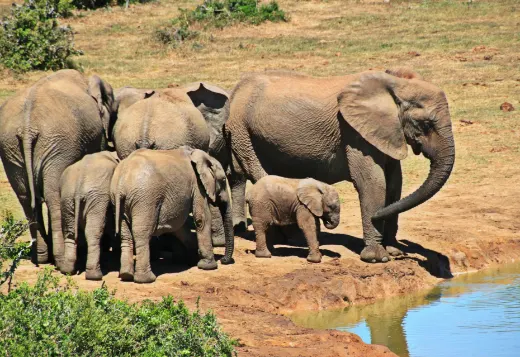
Udawalawe's open grassland around a big reservoir makes elephants easy to see all year. Herds with calves are common.
- Best for: families, first safaris and anyone who mainly wants elephants.
- Also nearby: the Elephant Transit Home, where orphaned calves are raised and later released. You can watch feeding time from a viewing platform.
- Base: Udawalawe town. It fits neatly between Ella and the south coast.
Wilpattu: for space and quiet
Wilpattu, in the north-west, is Sri Lanka's largest national park. It is a landscape of dense forest broken by natural lakes called villus.
- Best for: travellers who want leopards without the crowds, and birders.
- Downsides: the forest is thicker, so sightings take more patience, and it is further from the usual tourist loop.
- Base: near the park entrance, or Anuradhapura if you are combining it with the ancient cities.
Minneriya and Kaudulla: for the Gathering
These two parks near Sigiriya and Polonnaruwa are known for the Gathering. As other water sources dry up in the dry season, elephants converge on the old reservoirs to drink and graze on the fresh grass that grows as the water recedes. On a good day you can see hundreds at once.
- When: roughly July to October, with August and September usually the peak.
- How: the herds move between Minneriya, Kaudulla and the nearby Hurulu Eco Park depending on water and grass. Local jeep drivers know where they are each week, so let them choose the park.
- Time of day: afternoons, when the herds come out of the forest to the water.
- Base: Sigiriya, Habarana or Polonnaruwa.
Quick choice
- Leopards → Yala, or Wilpattu if you prefer it quiet.
- Elephants, any time of year → Udawalawe.
- Elephants in huge numbers → Minneriya or Kaudulla, July to October.
- Birds → Bundala, near Yala, or Wilpattu.
Practical tips
- Morning or afternoon? Half-day safaris start around 6 am or 2.30 pm. Animals are most active early and late; midday is hot and quiet.
- Park fees are paid at the gate per person, plus a vehicle charge and taxes. Ask your jeep driver whether their price includes them.
- Choose a considerate driver. A good one keeps a distance, switches off the engine at a sighting and does not race to every radio call. Say so if yours does not.
- Never feed wild animals, including the elephants that wait by the road at Udawalawe's fence. Fed elephants learn to approach vehicles, and that rarely ends well for them.
- Bring a hat, sunscreen, water, binoculars and a scarf for the dust.
Browse stays on the South Coast for Yala and Udawalawe, or the Cultural Triangle for Minneriya.