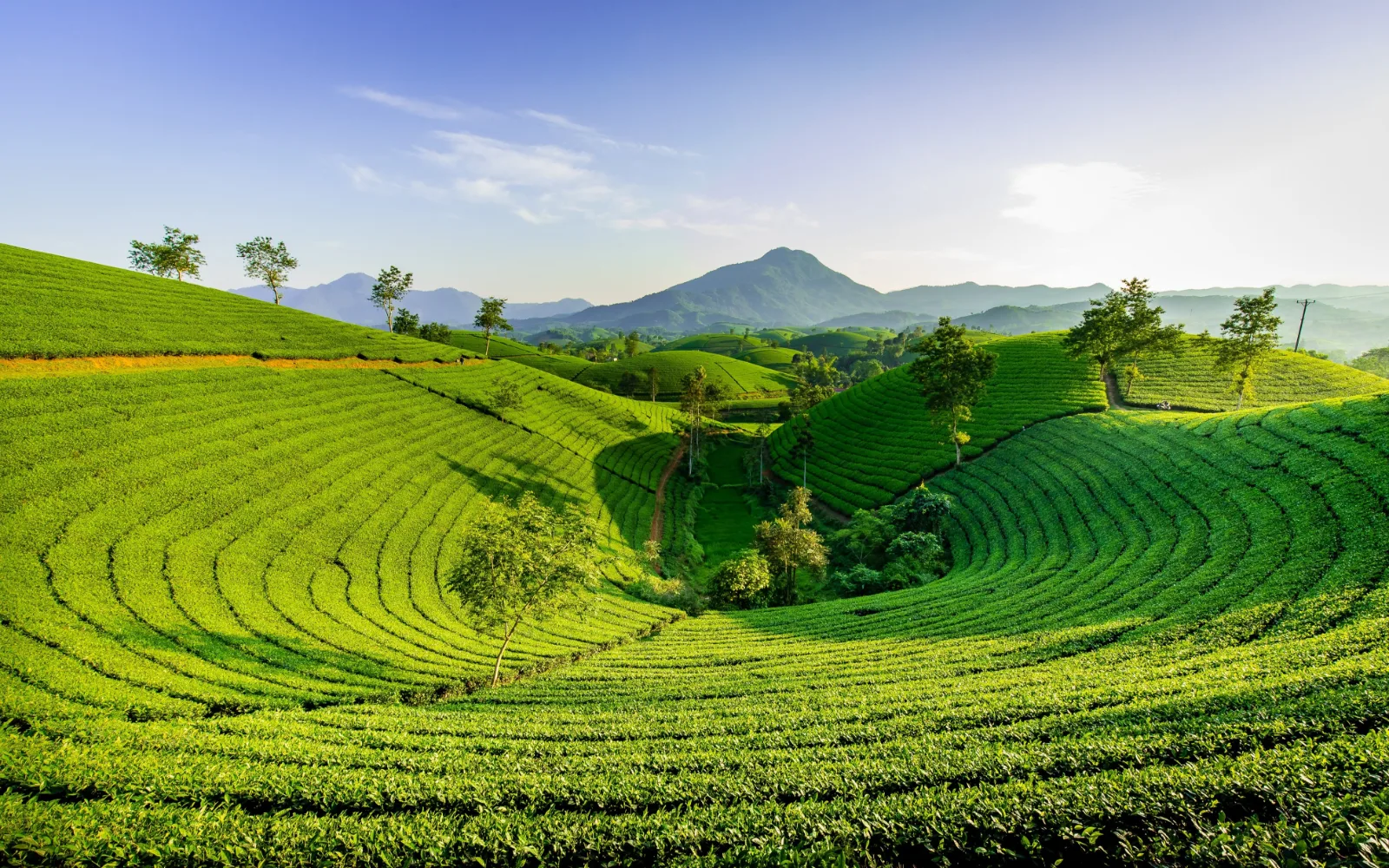
Sri Lanka is still sold to the world as Ceylon, and most of that is down to tea. You'll drink it everywhere, milky and sweet from a roadside kade or plain in a hotel pot. To understand it, go up into the hill country, walk the rows with the pluckers and stand inside a factory while the rollers run. Here is how a visit works, which factories open their doors and how to get the most from an hour among the bushes.
A short history in one cup
Ceylon was a coffee island until a leaf disease called coffee rust wiped the plantations out in the 1870s. A Scottish planter, James Taylor, had already planted the island's first commercial tea on 19 acres of Loolecondera estate, south-east of Kandy, in 1867. He rolled the first leaves by hand on his bungalow verandah. Within a few decades the hills were green with tea, and Thomas Lipton was selling it to the world from his estate at Dambatenne.
Today the Sri Lanka Tea Board divides tea country into seven regions, each with its own taste:
- High grown: Nuwara Eliya (light and fragrant), Dimbula (mellow), Uva (aromatic) and Uda Pussellawa (darker, tangy)
- Mid grown: Kandy (strong and full-bodied)
- Low grown: Ruhuna and Sabaragamuwa (bold, malty, long leaf)
Only tea that meets the Board's rules can carry a region's name. Pure Ceylon tea packed in Sri Lanka has the lion logo on the box.
What you'll see in the factory
Nearly all Ceylon tea is black tea made the "orthodox" way, and a factory tour walks you through it in the order it happens:
- Plucking: "two leaves and a bud" picked by hand, mostly by women, and weighed at collection points in the fields.
- Withering: the fresh leaf is spread in long troughs on the upper floor while fans blow air through it for around 12 to 18 hours, until it goes soft and limp.
- Rolling: heavy rollers twist the leaf and break its cells so the juices come out. This is the loud, fragrant part.
- Oxidation (the guides call it fermentation): the rolled leaf rests on the floor and turns from green to coppery brown in a couple of hours. Timing it is the tea maker's real skill.
- Drying: hot-air dryers stop the oxidation and turn the leaf black.
- Sorting and grading: sieves and shakers split the tea by size into grades such as OP, BOP, BOPF and Dust. Big leaf grades go into pots; the smallest end up in tea bags.
Most tours end in a tasting room, where you try a few grades side by side and can buy straight from the estate.
Tea factories you can visit
Pedro Tea Estate, Nuwara Eliya. The easy one if you're staying in town: about 3.5 km east on the Kandapola road, under Pidurutalagala. The tour is short (20 to 30 minutes) and there's a tea terrace with a view over the estate. Photography is usually not allowed inside the factory.
Damro Labookellie Tea Centre, Ramboda. On the A5 between Kandy and Nuwara Eliya, so it fits neatly into the drive up. Formerly Mackwoods Labookellie and one of the oldest tea centres on the island. Walk-in tours have been free, with a free cup of tea at the end; you can order cake with it in the tea lounge next door.
Uva Halpewatte Tea Factory, Ella. The big one in Uva, about 5 km from Ella station, dating back to the 1940s. Tours run daily from 8am to 4.30pm and take 40 minutes to an hour, with a tasting and a café looking over the valley. Booked online it's around USD 10; ask about the tea-plucking add-on.
Dambatenne Tea Factory, Haputale. Built by Thomas Lipton in 1890, on the road up to Lipton's Seat, the viewpoint where he surveyed his estates. Do the viewpoint first, before the mist rolls in, then a 20-minute tour of the factory on the way down. Lipton's Seat has charged foreigners around LKR 500.
Ceylon Tea Museum, Kandy. Not a working factory but the best place to start: the 1925 Hantane factory, 3 km from the city, with four floors of old machinery and a tasting room at the top. Open Tuesday to Friday 8.30am to 4pm, and weekends 8am to 5pm; closed Mondays, open on poya days. Foreign adults pay LKR 1,000, children LKR 500.
Prices and hours change, so check at the gate or with your guesthouse before you set off.
When to go
- Go in the morning on a weekday. Factories usually don't process on Sundays, and some are quiet early in the week. Machines in motion are the point of the visit, so ask before you go whether they're working that day.
- Get to viewpoints early. Lipton's Seat and the Nuwara Eliya estates are clearest before about 9 or 10am. Afternoons often bring cloud and rain.
- Pack a layer. Nuwara Eliya sits at around 1,900 m and is cold at night all year. Bring a fleece and a light rain jacket.
Meeting the tea pluckers
Most pluckers are Upcountry Tamil women, descendants of workers brought from South India in the 19th century. Their work is hard, on steep slopes in all weather, and it's paid by the kilo.
- Ask before you take a photo. A smile and a gesture at your camera is enough. Many will say yes; some won't.
- Tip if you photograph someone or they show you how to pluck. A few hundred rupees is normal and appreciated.
- Stay on the paths between rows and don't pick leaves yourself unless you're on a plucking tour.
- Tip your factory guide separately from any ticket price if the tour was good.
Buying tea to take home
The factory shop is the freshest place to buy, and you can taste before you choose. Look for the lion logo and the region on the pack. Loose leaf travels well; buy in sealed foil packs rather than open bags. For gifts, a mix of one high-grown tea (Nuwara Eliya or Uva) and one low-grown (Ruhuna) shows off the range.
Getting there
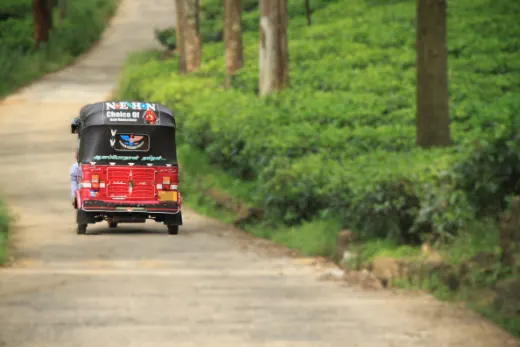
Most people visit tea country on the way between Kandy, Nuwara Eliya and Ella, by road or on the famous hill country train. See the Ella train in 2026 for the current route while the Kandy line is repaired, and our 10-day first-timer's route for where tea country fits in a trip. For short hops from town to the factory gate, a tuk-tuk is easiest: here's how to pay a fair fare.
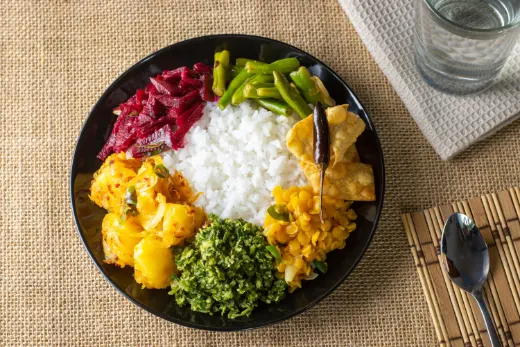
Hungry after the tasting? Our guide to rice and curry and eight more dishes to order by name covers what to eat next.
Have a question about planning your hill country days? Ask us at https://ceytravel.com/ask.