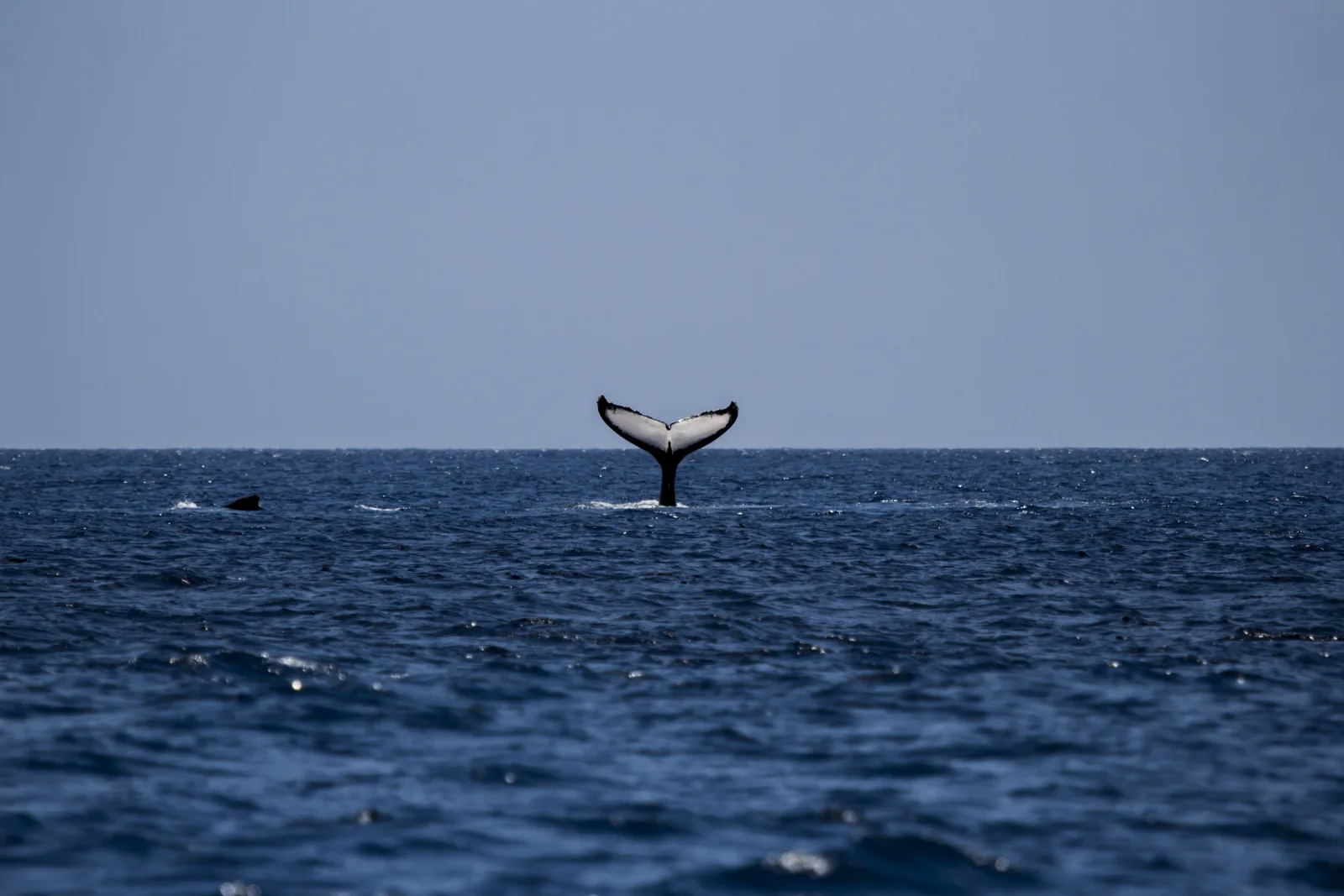
Sri Lanka is one of the most reliable places in the world to see blue whales, the largest animals that have ever lived. They feed in the deep water close to the coast, and sperm whales, Bryde's whales and large pods of spinner dolphins turn up too.
The catch is the monsoon. When one coast is rough, the boats stop running there and the season moves to the other side of the island.
When and where
- November to April: Mirissa, on the south coast. The calmer months are usually December to April, with sightings most frequent in the early part of the year. Boats leave from Mirissa harbour; Weligama and Dondra are nearby.
- Roughly May to October: Trincomalee, on the north-east coast. Deep underwater canyons come close to shore here, and the season runs while the south is on the wrong side of the monsoon.
- November to April: Kalpitiya, on the north-west coast. Better known for very large pods of spinner dolphins than for whales.
Seasons shift by a few weeks from year to year, so check with operators before you travel.
What a trip is like
- Boats leave early, often around 6 or 7 am, when the sea is calmest.
- Expect three to five hours at sea, sometimes more if the whales are far out.
- There will be long spells of nothing but ocean. Then a blow on the horizon, and the boat turns.
- Seas can be choppy even in season. If you get seasick, take something before you board, sit low in the middle of the boat and keep your eyes on the horizon.
Choosing an operator
There are many boats, and they are not all equal.
- Look for operators that keep a respectful distance, approach from the side rather than head-on, and limit how long they stay with one animal.
- Avoid any boat that chases whales or cuts across their path.
- Ask whether a naturalist is on board. It makes a big difference to what you understand about what you are seeing.
- Check what is included: breakfast, water, life jackets and a toilet on board are not guaranteed on cheaper boats.
- Book a day or two ahead in peak months, and leave a spare morning in case your trip is cancelled for weather.
What to bring
- Sunscreen, a hat and sunglasses: there is little shade on deck.
- A light waterproof layer.
- Binoculars and a camera with a zoom lens.
- Cash for tips and snacks.
Make a stay of it
Mirissa is a lively beach town with good seafood, and makes a natural stop on the south coast between Galle and Tangalle. Trincomalee pairs well with snorkelling at Pigeon Island and the beaches at Nilaveli and Uppuveli.
Browse stays on the South Coast or the East Coast.