Sri Lanka has 26 national parks, run by the Department of Wildlife Conservation. Together they cover about 5,734 square kilometres, from leopard country in the dry south-east to a cloud-forest plateau in the hills, two coral reefs and an island of wild ponies off Jaffna.
Most visitors see two or three. Yala, Horton Plains and Udawalawe drew the most visitors in 2023, according to the department's annual report. Many of the others get only a handful of jeeps a day, and a few have no visitor facilities at all.
Here is every park, grouped by the part of the island you would visit it from, with what it is known for and when to go.
The south and south-east
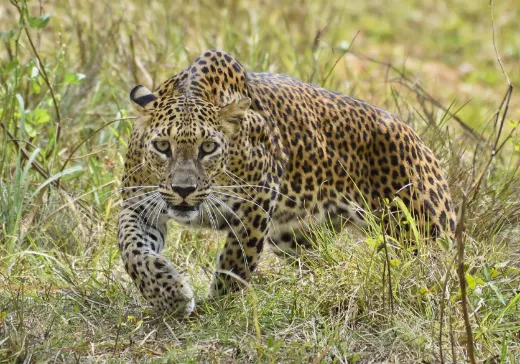
- Yala (Ruhuna): the most visited park in the country, and the best-known place in Asia to see a leopard. Sloth bears, elephants, crocodiles and peacocks too. Best from February to July. Parts close in very dry spells: Blocks 1 and 2 were shut from 14 September to 15 October 2026. Stay in Tissamaharama or Kirinda.
- Bundala: lagoons, salt pans and dunes on the coast west of Yala, and Sri Lanka's first wetland of international importance under the Ramsar Convention. Come for flamingos and tens of thousands of migrant shorebirds, roughly August to April.
- Lunugamvehera: forest and grassland around a large reservoir between Udawalawe and Yala, used by elephants moving between the two. Few jeeps, so quiet sightings.
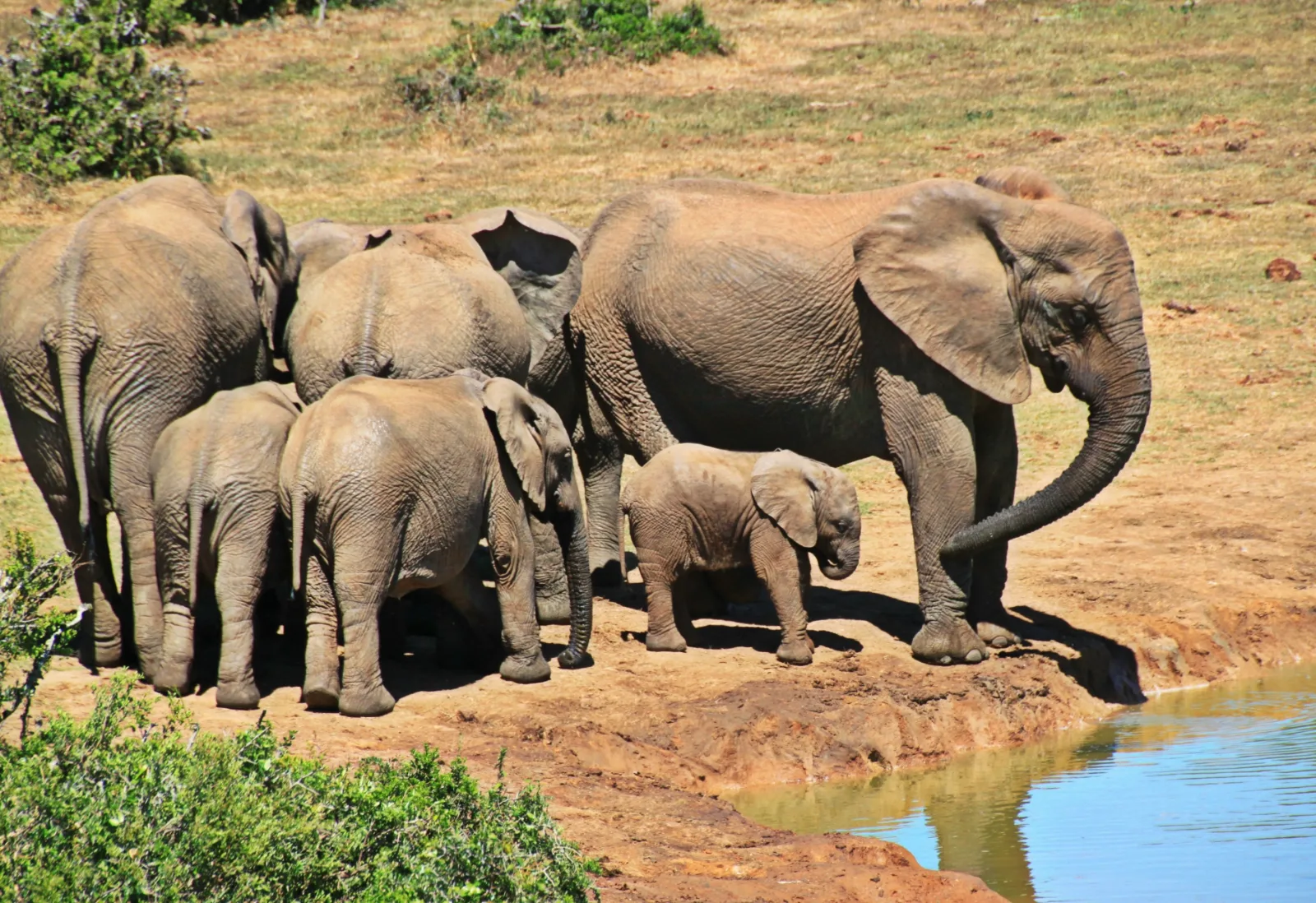
- Udawalawe: open grassland around a reservoir, and the most reliable place on the island to see elephants, all year. Pair it with the Elephant Transit Home next door, where orphaned calves are raised for release.
- Ussangoda: a small, windswept plateau of red soil and scrub above the sea near Ambalantota. Not a safari park; you walk it. Local legend ties it to the Ramayana.
- Hikkaduwa: a marine park of about one square kilometre, with coral close to the beach and turtles in the shallows. Snorkel or take a glass-bottomed boat from November to April, when the west coast is calm.
The east coast and Arugam Bay
- Kumana (Yala East): the quieter eastern end of the Yala wilderness, about an hour south of Arugam Bay. Its Kumana Villu, a 200-hectare mangrove swamp, fills with nesting pelicans, storks and herons from April to July. About 255 bird species have been recorded, and leopards and elephants live here too.
- Lahugala Kitulana: one of the smallest parks, around three old reservoirs right beside the Arugam Bay to Monaragala road. Herds of up to about 150 elephants gather at the water in the dry months, especially around August.
- Gal Oya: the only park in Sri Lanka with boat safaris, on the Senanayake Samudra, the country's largest reservoir. Elephants swim between its islands, most often seen late in the afternoon. Boats leave from Inginiyagala, near Ampara.
- Maduru Oya: a large dry-zone park around the Maduru Oya reservoir, with elephants and few visitors. The Vedda (Wanniyala-Aetto) village of Dambana is near its western edge. Reach it from Mahiyanganaya.
- Pigeon Island: a marine park a short boat ride off Nilaveli beach, north of Trincomalee. Coral gardens and blacktip reef sharks. Go from May to October, when the east coast is calm.
The Cultural Triangle and the north-west
- Minneriya: home of the Gathering, when hundreds of elephants come to graze the grass around the shrinking Minneriya tank, built in the 3rd century. July to October, peaking in August and September.
- Kaudulla: Minneriya's neighbour. As the water drops, the herds often move here, with up to about 250 elephants in October. Jeep drivers in Habarana know which park has them each week.
- Wasgamuwa: a quieter elephant park between the Mahaweli and Amban rivers, with sloth bears and good birding. A good choice if Minneriya feels crowded.
- Angammedilla: forest that protects the water supply of Polonnaruwa's Parakrama Samudra and the Minneriya and Giritale tanks. Elephants, deer and monkeys, few visitors.
- Flood Plains: villus and seasonally flooded grassland along the Mahaweli river, linking Wasgamuwa and Somawathiya for elephants. Rarely visited; check with the Department of Wildlife Conservation before you go.
- Somawathiya: named after the ancient Somawathiya Chaitya stupa inside it, a pilgrimage site. Riverine forest and floodplain on the Mahaweli, with elephants.
- Horowpathana: about 26 square kilometres of dry-zone forest in Anuradhapura district, declared in 2011 for its elephants. Little visitor infrastructure.
- Wilpattu: the largest park at 1,317 square kilometres, dotted with natural lakes called villus. Leopards, sloth bears and elephants in thick forest, with far fewer jeeps than Yala. Best roughly February to October. Enter from the Anuradhapura or Puttalam side.
The hill country
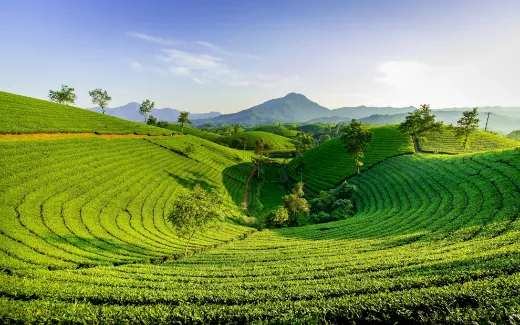
- Horton Plains: a high plateau of grassland and cloud forest, part of the Central Highlands World Heritage Site and the second most visited park. Walk the loop to World's End, a sheer drop of hundreds of metres, and Baker's Falls. Start at dawn: mist usually closes in by late morning. Clearest from January to March.
- Galway's Land: just 27 hectares of montane forest about 2 km east of the centre of Nuwara Eliya. One of the island's best birding spots, with around 30 resident and 20 migrant species, the migrants in the northern winter months.
Colombo and the west
- Horagolla: the smallest park, about 13 hectares of lowland rainforest near Nittambuwa, 35 km from Colombo on the Kandy road. Once part of the Bandaranaike family estate and named after its hora trees. A short forest walk that makes an easy stop on the drive to Kandy.
The north
Four former sanctuaries in the Northern Province became national parks on 22 June 2015. Visitor facilities are limited or absent, so treat them as places to look at rather than safaris.
- Delft: part of Delft island, south-west of Jaffna, known for its wild ponies, coral-stone walls and a baobab tree. Ferries run from Kurikadduwan jetty on Punkudutivu.
- Chundikkulam: lagoons and wetlands in Kilinochchi district, important for waterbirds, especially migrants in the northern winter.
- Adam's Bridge: a marine park around the chain of sandbanks and shallows between Mannar and India. Migrating birds follow it, and brown noddies breed on its dunes. Best seen from Talaimannar.
- Madhu Road: dry-zone forest east of Mannar, near the shrine of Our Lady of Madhu, with elephants.
Which park for what
- Leopards: Yala, or Wilpattu if you want it quieter.
- Elephants any time of year: Udawalawe.
- Elephants in their hundreds: Minneriya or Kaudulla, July to October.
- Elephants from a boat: Gal Oya.
- Birds: Bundala from August to April, Kumana from April to July.
- Walking, not a jeep: Horton Plains, Galway's Land or Horagolla.
- Snorkelling: Hikkaduwa from November to April, Pigeon Island from May to October.
Practical tips
- Two monsoons, two seasons. Parks in the south and west are best in the first half of the year; the east coast parks are best from May to September.
- Tickets are sold at the park gate. Foreign visitors pay a per-person fee set in US dollars, plus a vehicle charge, a service charge and tax. Ask your jeep driver whether their quote includes these.
- Jeeps are hired from drivers near each gate or through your hotel. Half-day safaris usually start around 6 am or 2.30 pm, when animals are most active.
- Choose a considerate driver. A good one keeps a distance, switches off the engine at a sighting and does not race to every radio call.
- Stay in the vehicle, keep your voice down, never feed animals and take your litter out with you.
- On the reefs, do not touch or stand on coral.
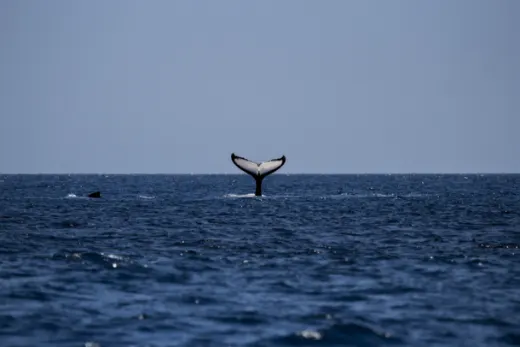
Comparing the big four? Read Yala, Udawalawe, Wilpattu or Minneriya? Choosing your Sri Lanka safari, and for the ocean, Whale watching in Sri Lanka: Mirissa or Trincomalee. Then find a place to stay near the parks.
Sources
- Department of Wildlife Conservation, Performance Report 2023 (26 national parks; 2023 visitor numbers): https://www.parliament.lk/uploads/documents/paperspresented/1734493119099693.pdf
- List of national parks of Sri Lanka (areas and dates): https://en.wikipedia.org/wiki/List_of_national_parks_of_Sri_Lanka
- Yala Blocks 1 and 2 closure, 2026: https://www.themorning.lk/articles/NC2xspxP2Uz5TnT0wAmb
- Kumana National Park: https://en.wikipedia.org/wiki/Kumana_National_Park
- Kaudulla National Park, Lonely Planet: https://www.lonelyplanet.com/points-of-interest/kaudulla-national-park/1194880
- Galway's Land National Park: https://en.wikipedia.org/wiki/Galway%27s_Land_National_Park
- Horagolla National Park: https://lk.chm-cbd.net/fr/node/711