Tipping in Sri Lanka is not compulsory, but it is part of how the tourism trade works. Wages in hotels, restaurants and on the road are modest, and a small tip in rupees goes a long way. The confusing part is the service charge that appears on many bills, and knowing who expects a tip and who doesn't. Here is how it works, with amounts you can use as a starting point.
Amounts are in Sri Lankan rupees (LKR). At the time of writing, USD 1 is about LKR 330, so LKR 500 is roughly USD 1.50.
The short version
- Restaurants with a service charge on the bill: nothing more is needed; leave LKR 200 to 500 in cash if the service was good
- Restaurants with no service charge: about 10%
- Local rice and curry shops and bakeries: round up, or leave the coins
- Hotel porter: LKR 100 to 200 a bag
- Housekeeping: LKR 200 to 500 a night
- Driver for a multi-day trip: LKR 1,500 to 3,000 a day, more for a chauffeur-guide who also guides you round the sites
- Site guide: LKR 500 to 1,000 for a short tour, more for half a day
- Safari jeep driver and tracker: LKR 1,000 to 2,000 for the driver and LKR 500 to 1,000 for the tracker, per jeep
- Tuk-tuks: no tip; round the fare up
- Temple shoe minder: LKR 50 to 100
These are per couple or family, not per person. Give more for great service, and less or nothing for poor service.
The service charge, explained
Most hotels and mid-range or smarter restaurants add a 10% service charge to the bill. Menus often show this as "++" after the price, which means service charge and government taxes are added on top, so the total can be a quarter or more above the menu price.
The service charge is meant to be shared among all staff, including the kitchen. How much reaches the person who served you varies from place to place. That is why many travellers still leave a little cash on top for good service, handed directly to the waiter.
Check the bill before you tip:
- Service charge listed: an extra tip is optional. LKR 200 to 500 in cash is a kind gesture.
- No service charge: leave about 10%.
- Paying by card: tip in cash anyway. A tip added to a card payment may not reach the staff.
In small local places, the kind covered in our guide to rice and curry and other dishes to order by name, nobody expects a tip. Rounding up is plenty.
Hotels, guesthouses and villas
- Porters: LKR 100 to 200 a bag, given when the bags reach your room.
- Housekeeping: LKR 200 to 500 a night, left daily on the pillow or desk, because the person cleaning can change from day to day.
- Small guesthouses and villas: staff here often cook, clean and carry for you. Many have a tip box at reception. If not, hand an envelope to the manager when you leave and ask for it to be shared. LKR 1,000 to 2,000 for each night of your stay is generous for a couple.
- Spa therapists: about 10% of the treatment price.
Drivers and guides
Your driver is likely to be the person you spend the most time with, and tips make up a real share of a driver's income.
- Driver for a multi-day trip: LKR 1,500 to 3,000 a day is a fair range for a couple or family. For a licensed chauffeur-guide who also explains the sites, LKR 3,000 to 4,500 a day is common. Give it in one envelope at the end of the trip.
- Airport or point-to-point transfer: LKR 300 to 500, more for a long drive.
- Site guides at places like Sigiriya, Polonnaruwa or Galle Fort usually charge a fee agreed up front. Add LKR 500 to 1,000 if they were good.
- Safari jeep driver and tracker: tip them separately at the end of the game drive. They are often the reason you saw the leopard. See choosing your Sri Lanka safari for how the jeeps work.
- Boat crews on whale watching or lagoon trips: LKR 500 to 1,000 for the crew to share.
One thing to know: some drivers earn commission from gem shops, spice gardens and souvenir stores they take you to. You are never obliged to buy, and a polite "no shopping stops, please" at the start is perfectly normal.
Tuk-tuks, taxis and ride apps
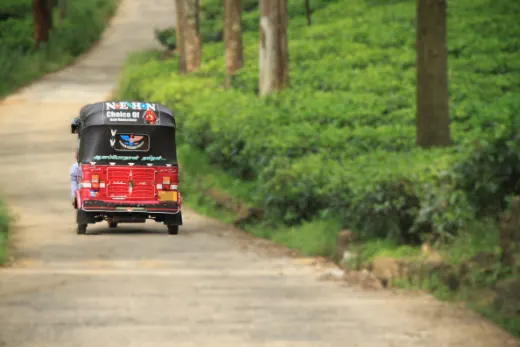
Tuk-tuk drivers don't expect a tip. On a metered or app ride, round up to the nearest LKR 50 or 100. If you agreed a price beforehand, pay that price. For a driver who waited for you or carried your bags, an extra LKR 100 to 200 is a nice touch. Our tuk-tuk guide covers fares and apps in detail.
Temples and small services
- Shoe minders at temple entrances: LKR 50 to 100 when you collect your shoes. Some big temples have a fixed fee instead.
- Temple donations go in the donation box, not to a person.
- Unofficial guides who start showing you round a temple or ruin will expect payment at the end. If you don't want one, say "no, thank you" early. If you do, agree an amount first.
- Photos: if you photograph a stilt fisherman, a tea plucker or a snake charmer, a tip is expected. Ask first, and LKR 200 to 500 is usual. Our Ceylon tea guide has more on meeting tea pluckers.
- Toilet attendants and car park helpers: LKR 50 to 100.
How to tip
- Use rupees, in cash. Foreign notes can be exchanged, but foreign coins can't be, so they are of no use to anyone.
- Keep small notes. ATMs give LKR 5,000 notes. Break them at supermarkets, fuel stations or your hotel, and keep a stash of LKR 100 and 500 notes for tips.
- Hand it over directly with a thank you, using your right hand or both hands. It is the polite way to give anything in Sri Lanka.
- Don't tip for bad service. Tipping is a thank you, not a tax.
Who not to tip
- Police, immigration and other officials. Never offer money; it would be a bribe.
- Bus conductors and train staff. Pay the fare and take your change.
- Shopkeepers and market sellers. Pay the price you agreed.
- Owners who serve you themselves in a small guesthouse or café. A good review helps them more.
Not sure what's fair for something on your trip? Ask us at https://ceytravel.com/ask.