
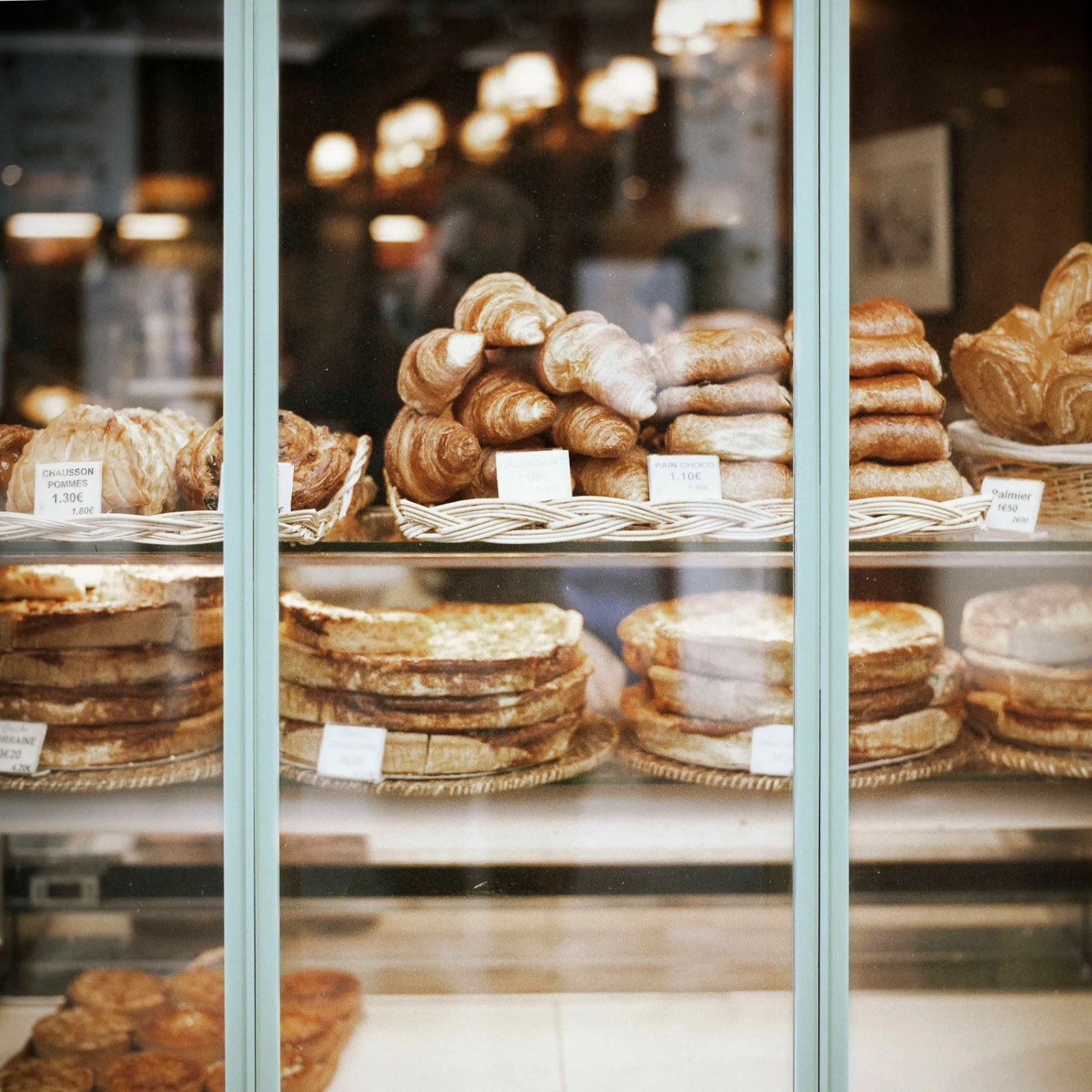
Short eats are the small savoury snacks stacked in glass cabinets at every Sri Lankan bakery, tea shop and bus stand: fish buns, rolls, cutlets, patties and lentil vadai. This guide explains what each one is, how ordering works, what to pay in late 2026 and how to pick a fresh one.
What short eats are
The name covers almost anything small enough to eat with your fingers next to a cup of tea. Most are baked or deep-fried and filled with spiced fish, meat, egg or vegetables.
They are a mix of influences. Food writers trace the cutlet to the Portuguese bolinho, the patty to the British pie and vadai to South Indian Tamil cooking.
Sri Lankans eat them at any hour: on the way to work, in school lunch boxes, at the afternoon tea break and on long bus and train rides. With the December to April travel season starting on the south and west coasts and in the hills, they are the easiest road-trip food you will find.
The ones to know by name
- Fish bun (maalu paan): a soft baked bun filled with spiced fish, usually mackerel or tuna.
- Rolls: a thin pancake wrapped around fish, mutton, chicken or vegetables, then crumbed and deep-fried. Often called Chinese rolls.
- Cutlets: round balls of spiced fish and potato, crumbed and fried.
- Patties and pastries: patties are half-moon parcels of fish and potato, fried. Pastries are the baked puff-pastry version.
- Vegetable roti (elawalu roti): a triangle of thin flatbread folded around curried potato and vegetables. Fish and mutton versions exist too, so ask.
- Vadai (wade): lentil fritters. Parippu vadai is flat and crunchy, with curry leaves and chilli. Ulundu vadai is a soft, doughnut-shaped fritter of black gram. Isso vadai has prawns pressed on top.
- Seeni sambol bun: a soft bun filled with sweet and spicy caramelised onion relish.
- Kimbula banis: the "crocodile bun", sprinkled with sugar and not spicy at all. Good for children.
How ordering works
At a bakery counter: point at what you want and pay by the piece. Ask for plain tea (black and usually sweet) or milk tea to go with it.
At a sit-down local eatery: many small restaurants are called "hotels". Ask for short eats and a plate of mixed pieces is put on your table. You are charged only for the ones you eat.
From a street cart: vadai carts fry in front of you. Colombo's Galle Face Green is the best-known place for isso vadai, with stalls and carts by the sea from about 4 or 5pm. It comes with an onion and chilli sambol.
From the bread tuk-tuk: the choon paan ("tune bread") is a three-wheeler with a glass cabinet in the back that drives around neighbourhoods playing Für Elise. It comes round from as early as 5.30am and again in the afternoon, selling bread, fish buns and kimbula banis.
On trains and buses: vendors walk through the carriages with baskets of vadai, often wrapped in recycled paper.
What it costs
Prices went up again on 30 October 2026, when the All Ceylon Bakery Owners' Association added LKR 5 to bread and short eats after a rise in the price of flour.
- Neighbourhood bakery or tea shop: roughly LKR 80 to 150 a piece (about US$0.25 to 0.45).
- Smarter Colombo bakery chains: about LKR 120 to 270 (about US$0.35 to 0.80). In November 2026 one long-running chain listed a fish bun at LKR 180 (about US$0.55) and a vegetable samosa at LKR 120.
- Plain vadai from a cart: usually under LKR 100 (about US$0.30).
- Isso vadai: roughly LKR 100 to 200 each (about US$0.30 to 0.60), and more at busy tourist spots. Ask before you order.
Three pieces make a light lunch for well under LKR 1,000 (about US$3). The dollar figures are approximate, worked out at about LKR 333 to the US dollar in late November 2026.
Where to find good ones
- Any town bakery: go in the morning, when the first batch is out, or again around the afternoon tea break.
- Colombo: long-running bakery names such as Green Cabin and Perera and Sons have branches across the city.
- Hela Bojun Hala: food courts set up by the agriculture ministry and run by local women, selling freshly made traditional food and snacks. The first opened in Kandy in 2006, and a 2022 report counted 22 outlets in towns and cities.
- The seafront at dusk: Galle Face Green and other beach fronts for vadai.
Common mistakes
- Not counting the plate. Note how many pieces you ate and check that the bill matches. Touch only what you plan to eat, because the untouched pieces are served again.
- Assuming "vegetable" means vegan. Bakery short eats often contain egg, and sambols can include dried Maldive fish. Ask which pieces have no fish, meat or egg.
- Buying fish or meat snacks late in the day. Fillings that have sat in a warm cabinet since morning are the risky ones.
- Expecting mild food. Most short eats carry chilli, and you cannot tell how much from the outside. Start with one.
Practical tips
- Eat where there is a queue. Fast turnover means fresh food.
- Pick something hot from the fryer when you can. When you cannot tell how long a tray has been out, a vegetable filling is the safer choice.
- Carry small notes and coins. Nobody expects a tip at a bakery; rounding up is plenty.
- For a morning train or an early safari, buy your short eats fresh that morning, not the night before.
- Prices change often. Treat the figures here as a guide and check before you go.
Planning where to sleep between snack stops? Browse holiday homes, apartments and camps listed by their owners on CeyTravel: https://ceytravel.com/stays
Sources
- Daily Mirror, bread and bakery prices up by Rs. 5 (30 October 2026): https://www.dailymirror.lk/breaking-news/Bread-price-increased-by-Rs-5-from-midnight/108-353761
- Green Cabin online menu (November 2026): https://ordernow.greencabin.lk/product/green-cabin-central-kitchen/savouries/buns/fish-bun/
- New Lines Magazine, why short eats are an emblem of Sri Lankan identity (July 2024): https://newlinesmag.com/spotlight/why-short-eats-are-an-emblem-of-sri-lankan-identity/
- Deccan Herald, short eats that define Sri Lanka's snacking culture: https://www.deccanherald.com/features/short-eats-that-define-sri-lanka-s-snacking-culture-1182529.html
- Culture Trip, why Sri Lankan short eats are a daily staple: https://theculturetrip.com/asia/sri-lanka/articles/why-sri-lankan-short-eats-are-a-daily-staple
- SBS Food, the choon paan men (February 2017): https://www.sbs.com.au/food/article/2017/02/07/choon-paan-men-sri-lankas-bread-tuk-tuks
- The National, Hela Bojun Hala eateries (March 2022): https://thenationalnews.com/weekend/2022/03/25/one-kothu-roti-at-a-time-how-sri-lankas-hela-bojun-hala-eateries-empower-women
- Saveur, snacking on trains in Sri Lanka (May 2015): https://www.saveur.com/dispatch-snacking-trains-sri-lanka/
- Travel With Hello, Sri Lanka food guide (May 2026): https://www.travelwithhello.com/blog/sri-lanka-food-dining-guide
- The Sri Lankan Guideline, food guide (2026): https://www.thesrilankanguideline.com/guides/food
- GalleFace.org visitor guide (2026): https://galleface.org/
- Roaming Vegans, Sri Lanka vegan guide (updated October 2026): https://roamingvegans.com/sri-lanka-vegan-guide/
- Travel Insighter, Sri Lankan snacks known as short eats (June 2025): https://travelinsighter.com/sri-lankan-snacks-to-try-known-as-short-eats/
- Central Bank of Sri Lanka rate for 23 November 2026, via Global Exchange Rates: https://www.globalexchangerates.org/cb_lk/
Ask a Local
Still have a question?
Ask it here. Ceya, our AI guide, or someone who lives in Sri Lanka will answer, free.


Comments
Members earn 5 CeyCoins for their first comment on a guide. How rewards work
Be the first to comment
Been there, or planning to go? Sign in to leave a comment.